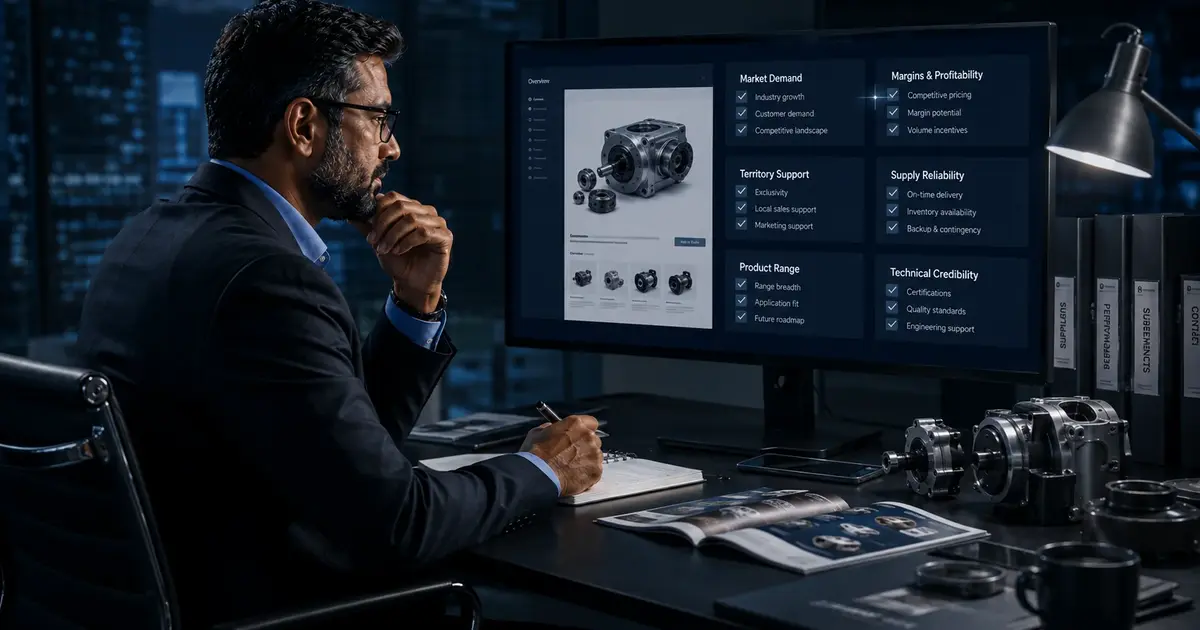
agency vs in-house marketing for manufacturers should be treated as a business decision, not a content-calendar item. The right operating model depends less on headline monthly cost and more on who owns business context, specialist depth, execution speed and accountability for commercial learning.
B2B growth decisions should be made from buyer behaviour and commercial evidence, not from a longer list of channels. The practical question is which part of discovery, evaluation, conversion or follow-through is currently limiting qualified opportunity creation.
Quick answer: what matters most?
For agency vs in-house marketing for manufacturers, begin with the commercial objective and buyer journey, not the channel. Strengthen the most important source material and operating gap, instrument the outcome, and expand only when sales and market evidence shows the next investment is justified.
agency vs in-house marketing for manufacturers: the practical framework
The framework below is built around the decisions a buyer and commercial team must make for agency vs in-house marketing for manufacturers. Each element should correspond to a real page, proof point, operating rule or handoff—not a line added simply to satisfy a marketing checklist.
1. Strategic ownership inside the business
Keep strategic ownership, account access, first-party data and business context under the company’s control. External partners can execute specialist work, but the business should be able to change providers without losing its advertising accounts, analytics history, source files or commercial learning.
2. Specialist skills needed across search, paid media, content, design and analytics
Use original business and subject-matter expertise as the source. Publish insights, evidence and decision guidance that a buyer could not obtain from a generic summary; this supports human trust as well as search and generative-answer visibility.
3. Volume and frequency of execution
Volume and frequency of execution should have a clear role in the commercial system, a named owner and an observable outcome; otherwise it is activity rather than strategy.
4. Access to product, technical and sales knowledge
Keep strategic ownership, account access, first-party data and business context under the company’s control. External partners can execute specialist work, but the business should be able to change providers without losing its advertising accounts, analytics history, source files or commercial learning.
5. Governance, approvals and decision speed
Governance, approvals and decision speed should have a clear role in the commercial system, a named owner and an observable outcome; otherwise it is activity rather than strategy.
6. Measurement ownership and continuity
Keep strategic ownership, account access, first-party data and business context under the company’s control. External partners can execute specialist work, but the business should be able to change providers without losing its advertising accounts, analytics history, source files or commercial learning.
Where otherwise capable companies lose buyer confidence
Check these failure modes before adding more traffic or content. Each one can weaken fit, trust or the usefulness of the first sales conversation.
Hiring a large internal team before the growth model is clear
Hiring a large internal team before the growth model is clear is worth correcting because it distorts the buyer journey around agency vs in-house marketing for manufacturers. Identify the specific uncertainty or process failure it creates, fix that source problem, and check whether the same objection, low-fit enquiry or repeated question reduces afterward.
Outsourcing strategy while keeping agencies away from sales data
Outsourcing strategy while keeping agencies away from sales data is worth correcting because it distorts the buyer journey around agency vs in-house marketing for manufacturers. Identify the specific uncertainty or process failure it creates, fix that source problem, and check whether the same objection, low-fit enquiry or repeated question reduces afterward.
Choosing a freelancer for a multi-specialist scope
Choosing a freelancer for a multi-specialist scope is worth correcting because it distorts the buyer journey around agency vs in-house marketing for manufacturers. Identify the specific uncertainty or process failure it creates, fix that source problem, and check whether the same objection, low-fit enquiry or repeated question reduces afterward.
Comparing only fees rather than total operating cost and missed opportunity
Comparing only fees rather than total operating cost and missed opportunity is worth correcting because it distorts the buyer journey around agency vs in-house marketing for manufacturers. Identify the specific uncertainty or process failure it creates, fix that source problem, and check whether the same objection, low-fit enquiry or repeated question reduces afterward.
What should be measured?
The scorecard should show whether agency vs in-house marketing for manufacturers is improving buyer quality and commercial progression rather than rewarding activity in isolation.
time from decision to execution
Define time from decision to execution precisely before putting it on the agency vs in-house marketing for manufacturers scorecard. Review it with source, buyer segment and subsequent sales outcome, and use it only if a change in the number would lead to a clear decision.
cost of required specialist capacity
Use a denominator tied to commercial quality—qualified enquiry, sales-accepted opportunity or another agreed outcome—rather than cheapest click or form. Include media and relevant execution cost when comparing alternatives so the economics are not artificially favourable.
qualified pipeline influenced
Use stage and ageing data to see where commercial work is accumulating and whether the opportunities entering the pipeline actually progress. Review value alongside count so a large number of small or weak opportunities does not hide the status of important deals.
number of unresolved ownership gaps
Define number of unresolved ownership gaps precisely before putting it on the agency vs in-house marketing for manufacturers scorecard. Review it with source, buyer segment and subsequent sales outcome, and use it only if a change in the number would lead to a clear decision.
A 90-day implementation sequence
Use the first cycle to create reliable learning: strengthen the highest-value part of agency vs in-house marketing for manufacturers, observe buyer and sales behaviour, and expand only where the evidence justifies it.
1. Define what must stay internal
Step 1: Define what must stay internal. Turn the decision into explicit criteria—buyer or market, required information, owner, boundaries and desired next action—so execution does not start from a vague brief.
2. List specialist work actually required
Step 2: List specialist work actually required. Turn the decision into explicit criteria—buyer or market, required information, owner, boundaries and desired next action—so execution does not start from a vague brief.
3. Price the complete operating model, not one role
Step 3: Price the complete operating model, not one role. Implement this part of agency vs in-house marketing for manufacturers with a named owner and a testable output, then review the effect with sales or technical stakeholders before expanding scope.
4. Set one owner for measurement and decisions
Step 4: Set one owner for measurement and decisions. Compare the result with the baseline, combine the numbers with sales feedback, document what changed and use that evidence to decide what to scale, correct or stop next.
5. Review the model after a full learning cycle
Step 5: Review the model after a full learning cycle. Compare the result with the baseline, combine the numbers with sales feedback, document what changed and use that evidence to decide what to scale, correct or stop next.
SEO, AEO and generative-search implications
SEO, answer-engine visibility and generative-search visibility share the same foundation: crawlable, specific source material that answers real questions and can be trusted. Google’s current guidance for AI experiences says standard SEO fundamentals still apply and emphasises unique, non-commodity, people-first content rather than scaled pages made for query variations.
For agency vs in-house marketing for manufacturers, use descriptive headings, a direct answer near the top, accurate industry terminology, original analysis, useful internal links and media that adds evidence. See the Google Search Central AI optimization guide for the primary external guidance used for this topic.
Internal links and the lead-conversion path
This article should lead a relevant reader deeper into TSPACE rather than operate as an isolated search page. It connects to the corresponding TSPACE improvement area and the relevant business audience. Those links also make the semantic relationship between the insight, capability and intended client clearer to search and AI systems.
When a reader becomes an enquiry, preserve target segment, source, content context, enquiry quality, follow-up owner, sales stage and learning from the outcome. The first response should continue from that context instead of making the buyer repeat the journey. Lead & Response Quality is therefore part of conversion, not a separate back-office concern.
The decision to take from this article
Digital Marketing Agency vs In-House Team for Manufacturers: Cost and ROI Comparison is useful only if it changes a real business decision. Apply the framework to the product, market or buyer segment closest to current revenue, fix the most important evidence or process gap, and review whether subsequent enquiries and conversations become more useful.
TSPACE Global works with businesses in this category by connecting positioning, buyer-facing evidence, SEO and AI visibility, conversion and sales follow-through. The objective is stronger discoverability and better commercial progression without replacing genuine expertise with generic marketing content.
Want to identify the highest-value gap in your B2B buyer journey?
Share your business context with TSPACE Global and we will identify the most relevant place to improve first.