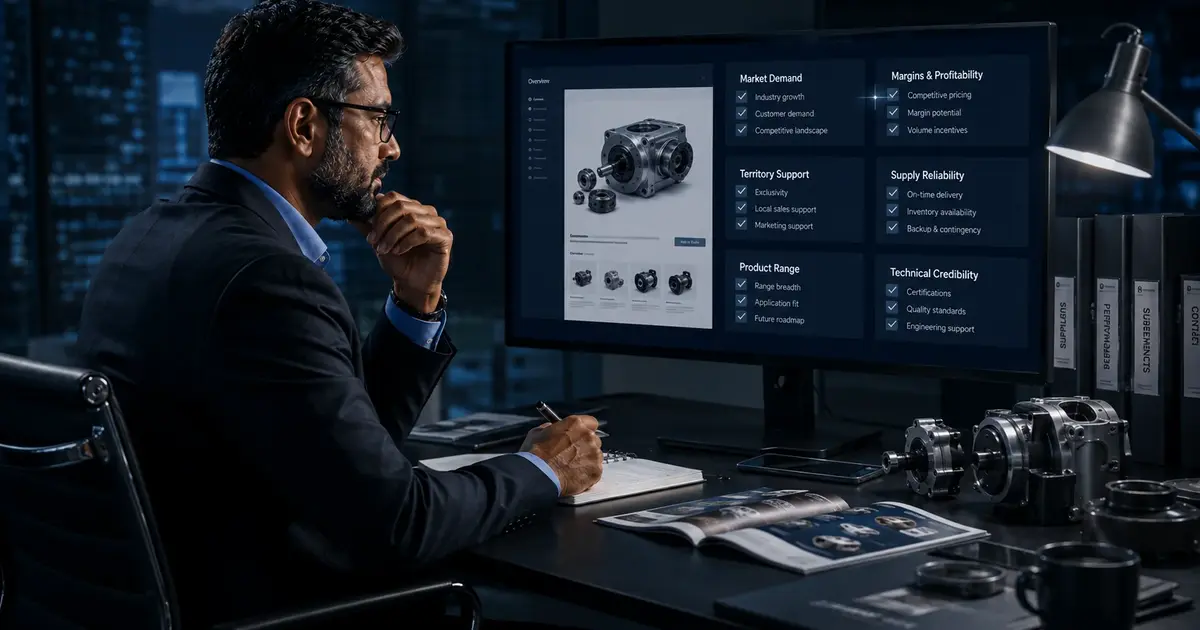
packaging manufacturer website audit should be treated as a business decision, not a content-calendar item. A packaging website loses serious enquiries when buyers cannot quickly establish material, process, performance, compliance, customisation and production fit.
OEM sourcing teams use public information as an early supplier filter. Process capability, materials, tolerances or performance, quality controls, certification scope, capacity context and vendor readiness should be understandable before the formal RFQ or audit begins.
Quick answer: what matters most?
For packaging manufacturer website audit, expose the capability a sourcing team will eventually validate anyway: process, material, quality, capacity, traceability and application fit. The website should strengthen pre-qualification and produce better RFQs without pretending to replace formal vendor approval.
packaging manufacturer website audit: the practical framework
The framework below is built around the decisions a buyer and commercial team must make for packaging manufacturer website audit. Each element should correspond to a real page, proof point, operating rule or handoff—not a line added simply to satisfy a marketing checklist.
1. Can buyers identify substrates, formats and processes?
Describe the process in sourcing terms: what is made, which operations are controlled internally, the materials or technologies involved and the realistic capability boundaries. This is more useful to an OEM evaluator than a generic “state-of-the-art facility” claim.
2. Are application and industry use cases clear?
Frame are application and industry use cases clear? around the OEM sourcing decision it supports, the evidence procurement or quality teams need and the boundary that will still require RFQ or formal qualification.
3. Are performance and compliance claims evidenced?
State material and tolerance or performance capability with units, ranges or conditions where public disclosure is appropriate. If final tolerance depends on design, tooling or process, say so and make the RFQ the point where project-specific feasibility is confirmed.
4. Is customisation explained without vague anything-is-possible language?
Frame is customisation explained without vague anything-is-possible language? around the OEM sourcing decision it supports, the evidence procurement or quality teams need and the boundary that will still require RFQ or formal qualification.
5. Are production and quality capabilities visible?
Show how quality is controlled and what evidence is available: relevant certification scope, inspection or testing, traceability and document control. Public proof supports shortlisting but should not imply the buyer can skip its own qualification or audit.
6. Does the enquiry form capture the information needed to quote intelligently?
Frame does the enquiry form capture the information needed to quote intelligently? around the OEM sourcing decision it supports, the evidence procurement or quality teams need and the boundary that will still require RFQ or formal qualification.
Where otherwise capable companies lose buyer confidence
Check these failure modes before adding more traffic or content. Each one can weaken fit, trust or the usefulness of the first sales conversation.
Leading with attractive pack photos and little specification context
Leading with attractive pack photos and little specification context is worth correcting because it distorts the buyer journey around packaging manufacturer website audit. Identify the specific uncertainty or process failure it creates, fix that source problem, and check whether the same objection, low-fit enquiry or repeated question reduces afterward.
Using sustainability claims without evidence or scope
Using sustainability claims without evidence or scope is worth correcting because it distorts the buyer journey around packaging manufacturer website audit. Identify the specific uncertainty or process failure it creates, fix that source problem, and check whether the same objection, low-fit enquiry or repeated question reduces afterward.
Hiding MOQ or capability boundaries when they materially affect fit
Hiding MOQ or capability boundaries when they materially affect fit is worth correcting because it distorts the buyer journey around packaging manufacturer website audit. Identify the specific uncertainty or process failure it creates, fix that source problem, and check whether the same objection, low-fit enquiry or repeated question reduces afterward.
Making buyers download a catalogue to understand the range
Making buyers download a catalogue to understand the range is worth correcting because it distorts the buyer journey around packaging manufacturer website audit. Identify the specific uncertainty or process failure it creates, fix that source problem, and check whether the same objection, low-fit enquiry or repeated question reduces afterward.
What should be measured?
The scorecard should show whether packaging manufacturer website audit is improving buyer quality and commercial progression rather than rewarding activity in isolation.
qualified enquiry rate on audited pages
Define “qualified” with sales before reporting it—fit, requirement, geography or market, buying context and enough contactability to take a next action. This is a stronger demand metric than total forms because it filters out activity the commercial team would not pursue.
form completion quality
Define form completion quality precisely before putting it on the packaging manufacturer website audit scorecard. Review it with source, buyer segment and subsequent sales outcome, and use it only if a change in the number would lead to a clear decision.
technical document or specification engagement
Treat this as supporting evidence of evaluation, not a conversion by itself. Look for repeat visits or use of high-intent product, application, technical or proof content and compare that behaviour with subsequent enquiries or opportunities.
sales rejection reasons caused by poor fit
Define sales rejection reasons caused by poor fit precisely before putting it on the packaging manufacturer website audit scorecard. Review it with source, buyer segment and subsequent sales outcome, and use it only if a change in the number would lead to a clear decision.
A 90-day implementation sequence
Use the first cycle to create reliable learning: strengthen the highest-value part of packaging manufacturer website audit, observe buyer and sales behaviour, and expand only where the evidence justifies it.
1. Audit the top revenue pages against sourcing questions
Step 1: Audit the top revenue pages against sourcing questions. Establish the current state before changing packaging manufacturer website audit: affected pages or records, current buyer behaviour, ownership, technical errors and sales feedback. Save the baseline so later improvement can be separated from assumption.
2. Fix missing technical and application information
Step 2: Fix missing technical and application information. Implement the change on the highest-value live asset first, have the relevant product/technical/commercial owner review it, and confirm that the buyer can actually use the revised information before repeating the pattern elsewhere.
3. Clean claims and evidence
Step 3: Clean claims and evidence. Implement this part of packaging manufacturer website audit with a named owner and a testable output, then review the effect with sales or technical stakeholders before expanding scope.
4. Simplify enquiry paths
Step 4: Simplify enquiry paths. Implement this part of packaging manufacturer website audit with a named owner and a testable output, then review the effect with sales or technical stakeholders before expanding scope.
5. Feed sales rejection reasons back into the site
Step 5: Feed sales rejection reasons back into the site. Implement this part of packaging manufacturer website audit with a named owner and a testable output, then review the effect with sales or technical stakeholders before expanding scope.
SEO, AEO and generative-search implications
SEO, answer-engine visibility and generative-search visibility share the same foundation: crawlable, specific source material that answers real questions and can be trusted. Google’s current guidance for AI experiences says standard SEO fundamentals still apply and emphasises unique, non-commodity, people-first content rather than scaled pages made for query variations.
For packaging manufacturer website audit, use descriptive headings, a direct answer near the top, accurate industry terminology, original analysis, useful internal links and media that adds evidence. See the ISO 9001 quality management for the primary external guidance used for this topic.
Internal links and the lead-conversion path
This article should lead a relevant reader deeper into TSPACE rather than operate as an isolated search page. It connects to the corresponding TSPACE improvement area and the relevant business audience. Those links also make the semantic relationship between the insight, capability and intended client clearer to search and AI systems.
When a reader becomes an enquiry, preserve component or pack requirement, material, process, quantity context, quality need, timeline and sourcing stage. The first response should continue from that context instead of making the buyer repeat the journey. Lead & Response Quality is therefore part of conversion, not a separate back-office concern.
The decision to take from this article
Packaging Industry Website Audit: What’s Costing You Enquiries is useful only if it changes a real business decision. Apply the framework to the product, market or buyer segment closest to current revenue, fix the most important evidence or process gap, and review whether subsequent enquiries and conversations become more useful.
TSPACE Global works with businesses in this category by connecting positioning, buyer-facing evidence, SEO and AI visibility, conversion and sales follow-through. The objective is stronger discoverability and better commercial progression without replacing genuine expertise with generic marketing content.
Want to identify the highest-value gap in your B2B buyer journey?
Share your business context with TSPACE Global and we will identify the most relevant place to improve first.