become a dealer funnel should be treated as a business decision, not a content-calendar item. A dealer funnel converts better when it explains fit and expectations before asking for commitment, then separates initial interest from commercial qualification.
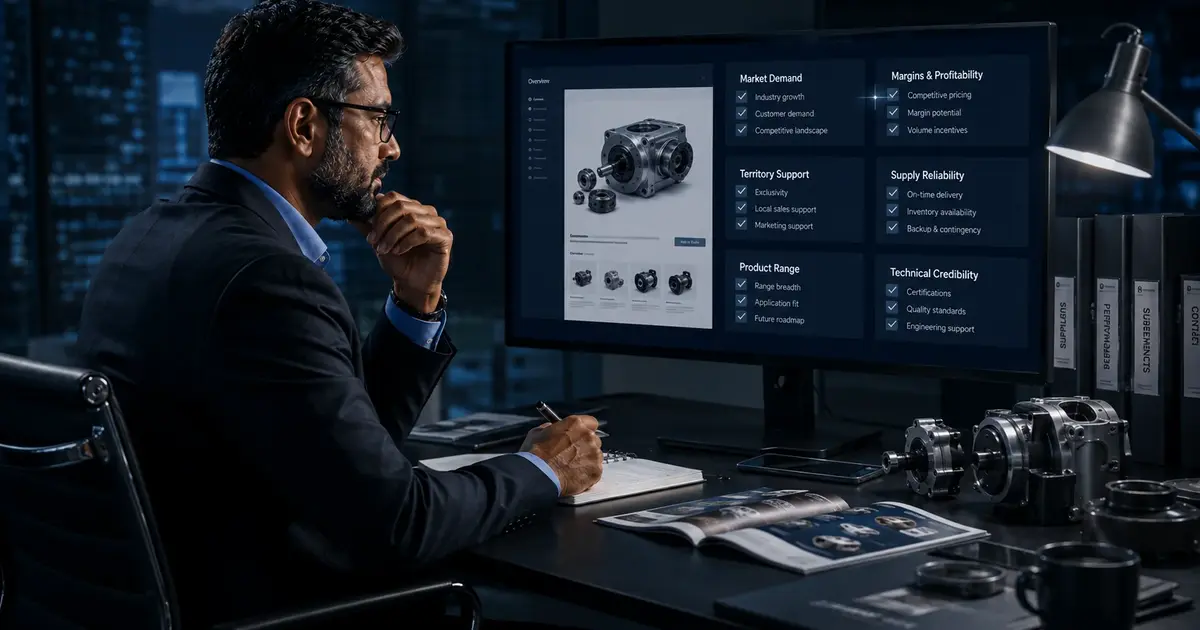
A distributor opportunity has to work for both sides. The prospective partner needs confidence in product, demand, supply and support; the brand needs confidence in territory, customer base, category experience and commitment. The digital funnel should help both sides qualify fit earlier.
Quick answer: what matters most?
For become a dealer funnel, define the ideal partner and territory first, explain the opportunity and support honestly, qualify business fit before commercial negotiation, and measure activation and repeat business rather than celebrating application volume.
become a dealer funnel: the practical framework
The framework below is built around the decisions a buyer and commercial team must make for become a dealer funnel. Each element should correspond to a real page, proof point, operating rule or handoff—not a line added simply to satisfy a marketing checklist.
1. Define who should apply
Use define who should apply to clarify mutual fit between brand and partner, the information needed for screening and the next commercial step.
2. Explain product, market and support proposition
Explain what support actually exists—product training, marketing material, lead support, launch activity or technical assistance—and what remains the partner’s responsibility. Specific support builds more trust than a vague promise of “full company support.”
3. Show territory logic where relevant
Define where the brand is actively seeking coverage and how territory is evaluated. Avoid implying exclusivity or availability until the commercial screening is complete; capture the applicant’s existing market presence and customer base.
4. Capture business profile and category experience
Use this to assess route-to-market fit, not merely company size. Existing customer types, category experience, sales capability and current portfolio help show whether the applicant can create relevant demand and support the product.
5. Set a screening step before commercial discussion
Separate initial interest from commercial approval. Use a short application, then screen territory, experience, customer base, commitment and commercial fit before discussing onboarding requirements and activation.
6. Create a visible path from approval to activation
Measure whether approved partners become active: onboarding completion, first order, product movement and repeat ordering. Application volume alone can hide a channel programme that is not creating productive distribution.
Where otherwise capable companies lose buyer confidence
Check these failure modes before adding more traffic or content. Each one can weaken fit, trust or the usefulness of the first sales conversation.
Using a one-field call-me form
Using a one-field call-me form is worth correcting because it distorts the buyer journey around become a dealer funnel. Identify the specific uncertainty or process failure it creates, fix that source problem, and check whether the same objection, low-fit enquiry or repeated question reduces afterward.
Hiding requirements until late in the process
Hiding requirements until late in the process is worth correcting because it distorts the buyer journey around become a dealer funnel. Identify the specific uncertainty or process failure it creates, fix that source problem, and check whether the same objection, low-fit enquiry or repeated question reduces afterward.
Treating every city as an open territory
Treating every city as an open territory is worth correcting because it distorts the buyer journey around become a dealer funnel. Identify the specific uncertainty or process failure it creates, fix that source problem, and check whether the same objection, low-fit enquiry or repeated question reduces afterward.
Measuring form volume instead of partner quality
Measuring form volume instead of partner quality is worth correcting because it distorts the buyer journey around become a dealer funnel. Identify the specific uncertainty or process failure it creates, fix that source problem, and check whether the same objection, low-fit enquiry or repeated question reduces afterward.
What should be measured?
The scorecard should show whether become a dealer funnel is improving buyer quality and commercial progression rather than rewarding activity in isolation.
application-to-screening rate
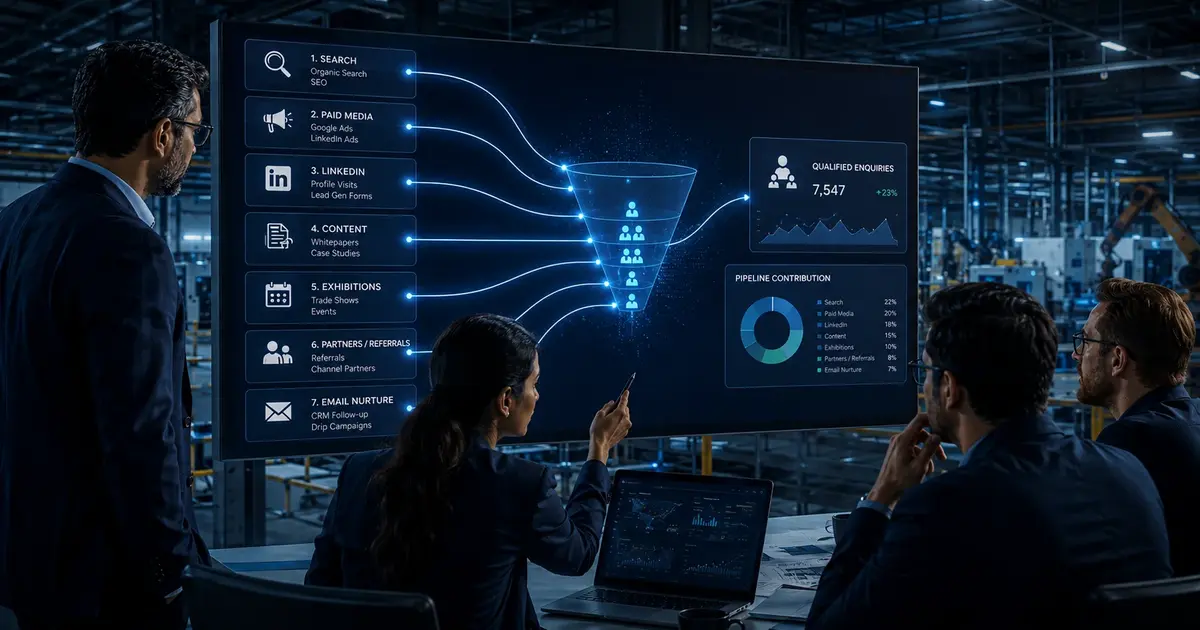
Follow the channel funnel beyond the form: application → qualified screening → approval/onboarding → first order → repeat activity. This exposes whether recruitment is creating productive partners or merely generating contact records.
qualified partners by territory
Follow the channel funnel beyond the form: application → qualified screening → approval/onboarding → first order → repeat activity. This exposes whether recruitment is creating productive partners or merely generating contact records.
time from application to decision
Follow the channel funnel beyond the form: application → qualified screening → approval/onboarding → first order → repeat activity. This exposes whether recruitment is creating productive partners or merely generating contact records.
activation and first-order rate
Use stage and ageing data to see where commercial work is accumulating and whether the opportunities entering the pipeline actually progress. Review value alongside count so a large number of small or weak opportunities does not hide the status of important deals.
A 90-day implementation sequence
Use the first cycle to create reliable learning: strengthen the highest-value part of become a dealer funnel, observe buyer and sales behaviour, and expand only where the evidence justifies it.
1. Write the ideal-partner criteria
Step 1: Write the ideal-partner criteria. Implement this part of become a dealer funnel with a named owner and a testable output, then review the effect with sales or technical stakeholders before expanding scope.
2. Build the opportunity page around mutual fit
Step 2: Build the opportunity page around mutual fit. Implement the change on the highest-value live asset first, have the relevant product/technical/commercial owner review it, and confirm that the buyer can actually use the revised information before repeating the pattern elsewhere.
3. Design two-stage qualification
Step 3: Design two-stage qualification. Implement this part of become a dealer funnel with a named owner and a testable output, then review the effect with sales or technical stakeholders before expanding scope.
4. Assign screening ownership
Step 4: Assign screening ownership. Implement this part of become a dealer funnel with a named owner and a testable output, then review the effect with sales or technical stakeholders before expanding scope.
5. Close the loop with approved, rejected and future-fit outcomes
Step 5: Close the loop with approved, rejected and future-fit outcomes. Implement this part of become a dealer funnel with a named owner and a testable output, then review the effect with sales or technical stakeholders before expanding scope.
SEO, AEO and generative-search implications
SEO, answer-engine visibility and generative-search visibility share the same foundation: crawlable, specific source material that answers real questions and can be trusted. Google’s current guidance for AI experiences says standard SEO fundamentals still apply and emphasises unique, non-commodity, people-first content rather than scaled pages made for query variations.
For become a dealer funnel, use descriptive headings, a direct answer near the top, accurate industry terminology, original analysis, useful internal links and media that adds evidence. See the International Trade Centre for the primary external guidance used for this topic.
Internal links and the lead-conversion path
This article should lead a relevant reader deeper into TSPACE rather than operate as an isolated search page. It connects to the corresponding TSPACE improvement area and the relevant business audience. Those links also make the semantic relationship between the insight, capability and intended client clearer to search and AI systems.
When a reader becomes an enquiry, preserve territory, customer base, category experience, investment intent, current brands, expected support and onboarding stage. The first response should continue from that context instead of making the buyer repeat the journey. Lead & Response Quality is therefore part of conversion, not a separate back-office concern.
The decision to take from this article
Building a Become a Dealer Funnel That Actually Converts is useful only if it changes a real business decision. Apply the framework to the product, market or buyer segment closest to current revenue, fix the most important evidence or process gap, and review whether subsequent enquiries and conversations become more useful.
TSPACE Global works with businesses in this category by connecting positioning, buyer-facing evidence, SEO and AI visibility, conversion and sales follow-through. The objective is stronger discoverability and better commercial progression without replacing genuine expertise with generic marketing content.
Want to identify the highest-value gap in your B2B buyer journey?
Share your business context with TSPACE Global and we will identify the most relevant place to improve first.