If you want to understand what distributors look for before signing up with a new brand, start by seeing the opportunity from their side of the table.
A distributor is not simply deciding whether a product is good. They are deciding whether the relationship deserves scarce commercial resources: working capital, warehouse space, sales time, customer relationships and management attention. The product may be excellent and the proposed margin attractive, but that still does not make the opportunity easy to accept.
The strongest distributor propositions reduce uncertainty. They help a potential partner answer a sequence of practical questions: Is there demand? Can I make money? Will supply be reliable? Will the company support the market? Is the territory sensible? Will I be competing with the brand itself? And does this business look organised enough to trust?
What distributors look for before signing up goes far beyond margin
Margin matters, but it is rarely the only number that matters.
A distributor also thinks about stock movement, credit exposure, order sizes, inventory turns, service burden, sales effort and the probability of repeat demand. A headline margin that looks attractive can become uninteresting if products move slowly, supply is unpredictable or the distributor must create the entire market from zero without support.
This is why a distributor-acquisition page should not behave like a consumer offer. It should present the commercial logic of the partnership clearly enough to attract serious prospects while keeping confidential details for the qualification stage.
1. Evidence that the market can support the product
Distributors want confidence that they will not be carrying a product nobody is asking for.
That evidence can come from different places: an established customer base, a clear application need, a recognisable brand, strong category growth, differentiated product performance, geographic white space or a credible plan for creating demand.
The mistake is to present “huge market potential” as a claim without context. Stronger communication shows who buys the product, why they buy it, where the opportunity exists and how the brand intends to support market development.
If the business serves multiple buyer types, the proposition should also make that segmentation visible. A distributor targeting industrial plants evaluates a lubricant, chemical, machine component or packaging product very differently from a retailer or mass-market dealer.
2. A proposition they can explain to their own customers
A distributor has to sell the product after signing the agreement. If the brand cannot explain why a buyer should choose it, the distributor inherits the problem.
Clear product positioning therefore matters twice: once to win the distributor and again to help the distributor sell.
Useful support includes application-led product information, comparison logic, technical documents, case evidence, sales decks, product images, demonstration material, objection handling and a website that makes the same argument consistently.
TSPACE’s website communication work is built around this issue: a buyer—or a channel partner—should not have to decode what makes the business relevant.
3. Supply reliability and operational seriousness
Channel partners remember supply failures longer than marketing campaigns.
A distributor needs confidence that orders can be fulfilled, documentation is available, product quality is consistent and issues can be escalated without chaos. In technical sectors, buyers may also need batch information, certificates, test data, safety documentation, installation support or application guidance.
Not every operational detail belongs on a public webpage. But the digital presence should signal that these systems exist. Certifications, facilities, quality processes, documented product families, technical resources and clear contact pathways all reduce perceived risk.
4. Territory clarity and channel conflict rules
One of the quickest ways to weaken distributor confidence is to create uncertainty about who owns the market.
Potential partners want to know whether territories are exclusive or non-exclusive, how direct sales are handled, whether ecommerce or key accounts compete with the channel, what happens when two distributors pursue the same customer and how performance affects territory rights.
These rules may be negotiated later, but a credible recruitment process acknowledges the issue rather than pretending channel conflict never happens.
For companies expanding channel networks, a clear dealer and distributor growth system should connect partner recruitment with the way leads, territories and follow-up are managed after onboarding.
5. Whether the brand will create demand or only transfer responsibility
A common distributor objection is unspoken: “Are you giving me a business opportunity, or are you asking me to become your marketing department?”
Serious partners look for signs that the brand will remain active after appointment. That can include market development, digital campaigns, product education, technical support, localised content, lead sharing, exhibitions, search visibility or joint account development.
Modern B2B buyers use many channels during research and evaluation. McKinsey’s latest B2B research continues to show that buyers combine digital, remote and human interactions rather than choosing one exclusively. That makes a weak digital presence a channel problem as well as a marketing problem. McKinsey’s recent B2B buyer research is a useful reference for how expectations around integrated commercial experiences are evolving.
6. The quality of the company behind the opportunity
Before a distributor commits, someone will usually search the company name.
They may visit the website, inspect LinkedIn, search for customer references, look at product documentation, check how long the company has operated and judge whether the business appears consistent across touchpoints. This is where digital credibility becomes commercial evidence.
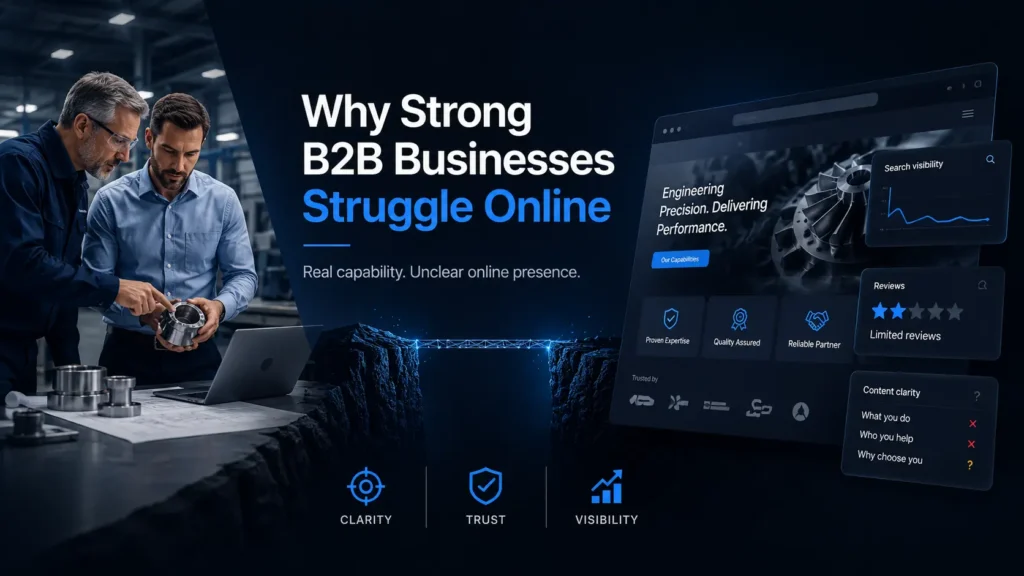
A company can have a strong plant, good products and experienced management, yet still look uncertain online because the website is generic, old information remains visible or the product range is poorly explained.
That gap is exactly why digital presence should be treated as part of distributor acquisition, not as a separate branding exercise.
7. A professional onboarding and follow-up process
The recruitment experience is a preview of the relationship.
If a distributor enquiry disappears into a generic inbox, receives repeated calls from different people or is asked for the same information several times, the prospect learns something about the company before any agreement is signed.
A better process has clear ownership, qualification stages, documentation, response expectations and next steps. A CRM can help, but software does not fix a process that has not been defined.
TSPACE’s lead response quality approach focuses on the practical handoff from enquiry to commercial action so opportunities do not disappear after acquisition.
The distributor is evaluating risk as much as opportunity
The best distributor propositions do not try to make the opportunity sound effortless. They make it understandable.
A potential partner should be able to see the product fit, market logic, business support, operational capability and seriousness of the company. When that information is clear, the sales conversation starts at a better level. Instead of explaining who you are from the beginning, the conversation can focus on whether the partnership makes commercial sense for both sides.
Need your B2B business to look clearer and more trustworthy online?
Share your business context with TSPACE Global and we’ll suggest the most relevant next step.